

 Image 1 of 2
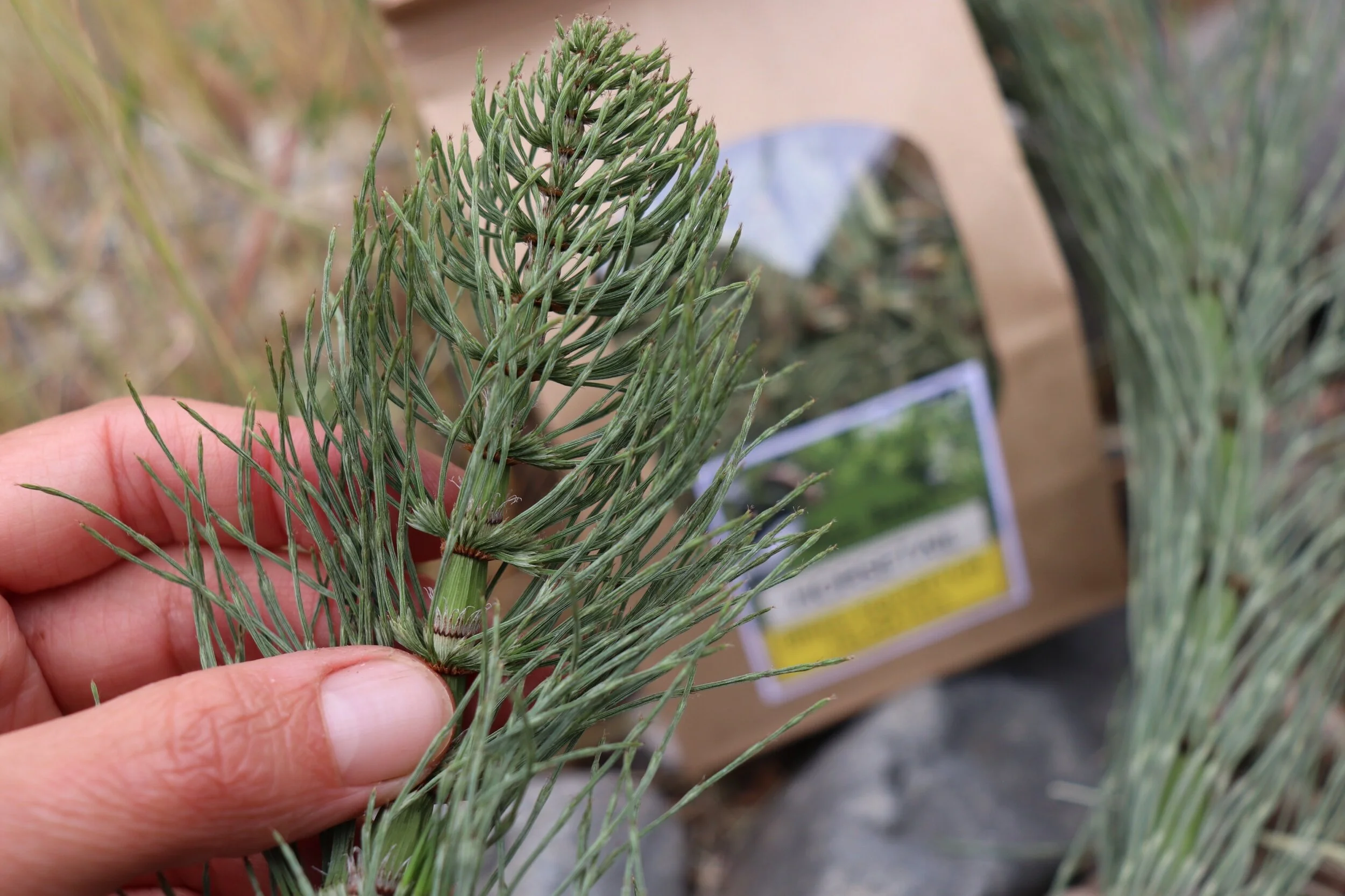 Image 2 of 2
Not all plant material is created equal.
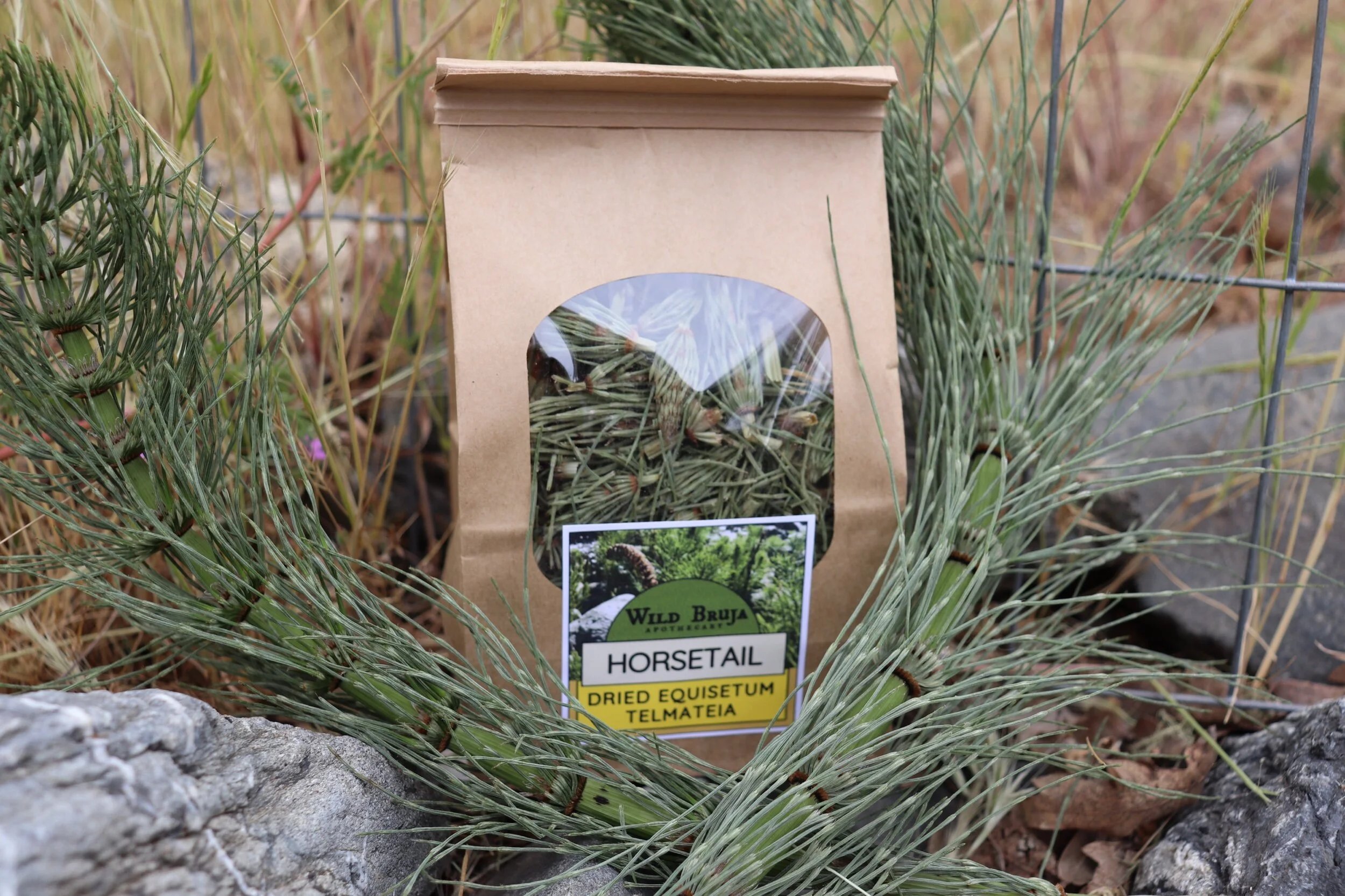
This is 1 oz of freshly wildcrafted and dried Equisetum telmateia (Greater Horsetail).
Horsetail, or the Equisetum spp. is an amazing perennial plant that supplies a natural source of potassium, magnesium, calcium, silica, and iron.
I have access to pristine unpolluted areas in the wilderness that are ideal for harvesting healthy Equisetum plant material.
I harvest the above ground parts in the early spring, dry, and make a nutritive infusion to drink, add to vinegar, the bath; horsetail has many topical applications.
Horsetail helps assimilate phosphorous, & improves skin, hair, nails & supports healthy connective tissue and collagen.
Commonly used in hair products, you can brew with dried Stinging Nettle and Rosemary to make a lovely strengthening rinse for the hair.
The Equisetum family are known as ‘living fossils’ as they are the only living examples of the Equisetopsida class which formed the major part of the understory of the great Paleozoic forests. These covered the land for over 100 million years, roughly 542 to 541 million years ago, a time which saw the first large reptiles and an explosion in marine life.
Horsetail is a wonderful example of the doctrine of signatures as its skeletal structure and jointed segments indicate one of its primary uses in strengthening and healing joints, bones & connective tissue.
The astringent and healing properties also make it a great wound herb when used externally as a compress or poultice.
A nutrient dense vinegar can be made by steeping Horsetail herb in apple cider vinegar for a month to six weeks, straining, then enjoying added to salads, diluted in water for compresses or added to the bath water – about 1/2 a cup. Vinegar is a particularly useful method for extracting minerals from a wide variety of herbs.
Not all plant material is created equal.
This is 1 oz of freshly wildcrafted and dried Equisetum telmateia (Greater Horsetail).
Horsetail, or the Equisetum spp. is an amazing perennial plant that supplies a natural source of potassium, magnesium, calcium, silica, and iron.
I have access to pristine unpolluted areas in the wilderness that are ideal for harvesting healthy Equisetum plant material.
I harvest the above ground parts in the early spring, dry, and make a nutritive infusion to drink, add to vinegar, the bath; horsetail has many topical applications.
Horsetail helps assimilate phosphorous, & improves skin, hair, nails & supports healthy connective tissue and collagen.
Commonly used in hair products, you can brew with dried Stinging Nettle and Rosemary to make a lovely strengthening rinse for the hair.
The Equisetum family are known as ‘living fossils’ as they are the only living examples of the Equisetopsida class which formed the major part of the understory of the great Paleozoic forests. These covered the land for over 100 million years, roughly 542 to 541 million years ago, a time which saw the first large reptiles and an explosion in marine life.
Horsetail is a wonderful example of the doctrine of signatures as its skeletal structure and jointed segments indicate one of its primary uses in strengthening and healing joints, bones & connective tissue.
The astringent and healing properties also make it a great wound herb when used externally as a compress or poultice.
A nutrient dense vinegar can be made by steeping Horsetail herb in apple cider vinegar for a month to six weeks, straining, then enjoying added to salads, diluted in water for compresses or added to the bath water – about 1/2 a cup. Vinegar is a particularly useful method for extracting minerals from a wide variety of herbs.